Two pulse, a triangle, some noise and a sample
The 2A03 gives a composer two pulse channels with four duty cycles, one triangle with no volume control, a noise channel and a DPCM sample channel. Everything written for the console lives inside that.
The five channels every NES composer ever had
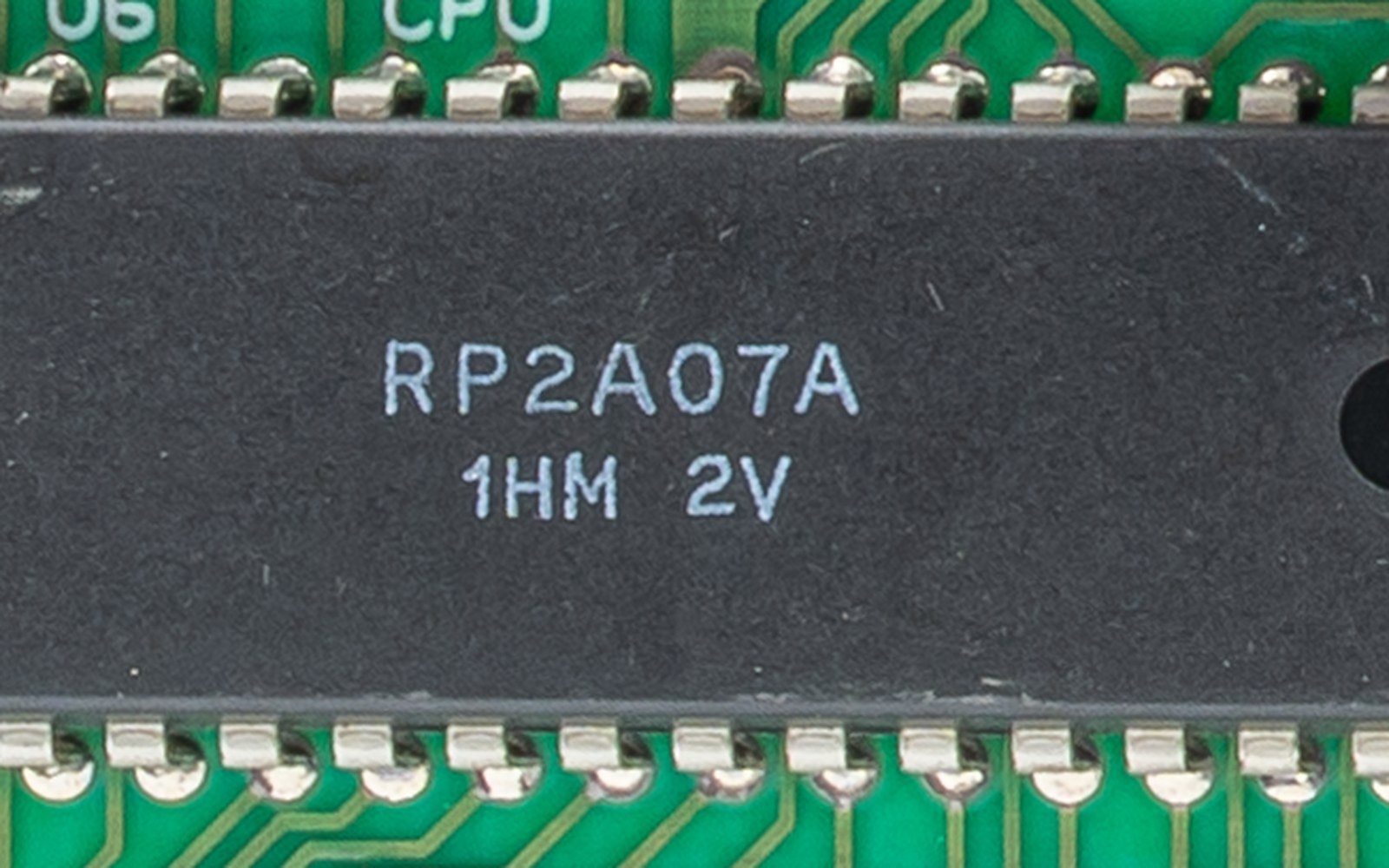
Every piece of music written for the NES — from Koji Kondo's Super Mario Bros. overworld theme to the densest Sunsoft action score — comes from exactly the same five voices. Ricoh's 2A03, the chip that drove every North American NES and sat at the heart of the Famicom before it, offers two pulse-wave channels, one triangle wave, one noise channel, and one DPCM sample channel. That is the entire palette. No filters, no real envelopes on the triangle, no waveform shaping beyond a few hard options. The hardware froze at launch in 1983 and stayed frozen, so every composer who ever touched the platform learned to think inside the same five walls.
What makes that remarkable is not the constraint itself — every platform is constrained — but how specifically shaped those constraints are, and how directly they show up in the sound of NES music as a genre. Understanding what each channel can and cannot do explains why the music sounds like it does, and why composers who worked the hardware hardest were not cheating around it but working with its grain.
Pulse one and pulse two
The two pulse channels are the closest thing the 2A03 has to general-purpose melodic voices. Each generates a rectangular wave at a programmable pitch, and each has a simple volume envelope — attack is instant, but the decay and sustain stages give a note its character. The one real expressive variable beyond volume and pitch is the duty cycle: the proportion of each wave period spent in the high state. The 2A03 offers four options — 12.5 percent, 25 percent, 50 percent, and 75 percent (which is identical to 25 percent inverted and sounds the same). A 12.5 percent pulse is thin and nasal; 50 percent produces the fullest, squarest tone. Composers learned to pair the two channels with different duties to thicken the texture, or to have them play in unison at slightly different pitches for a chorus effect. Kondo used both approaches; so did Hirokazu Tanaka, though his characteristic move was to set one pulse channel to a harmonic line while the other drove melody, creating implied counterpoint with only two voices.
The pulse channels also carry the bulk of the arpeggio work on the platform. Because there are no chords — one channel, one pitch — any sense of harmonic movement in a single voice has to come from cycling through intervals fast enough that the ear fuses them. The technique is ancient in electronic music, but on the NES it became a fingerprint: that chattering, rapid-fire quality that signals a chord voicing on a machine that cannot voice chords. In faster passages the effect is a shimmer; slowed down it splits into the individual notes of a figure.
The triangle and its silence problem
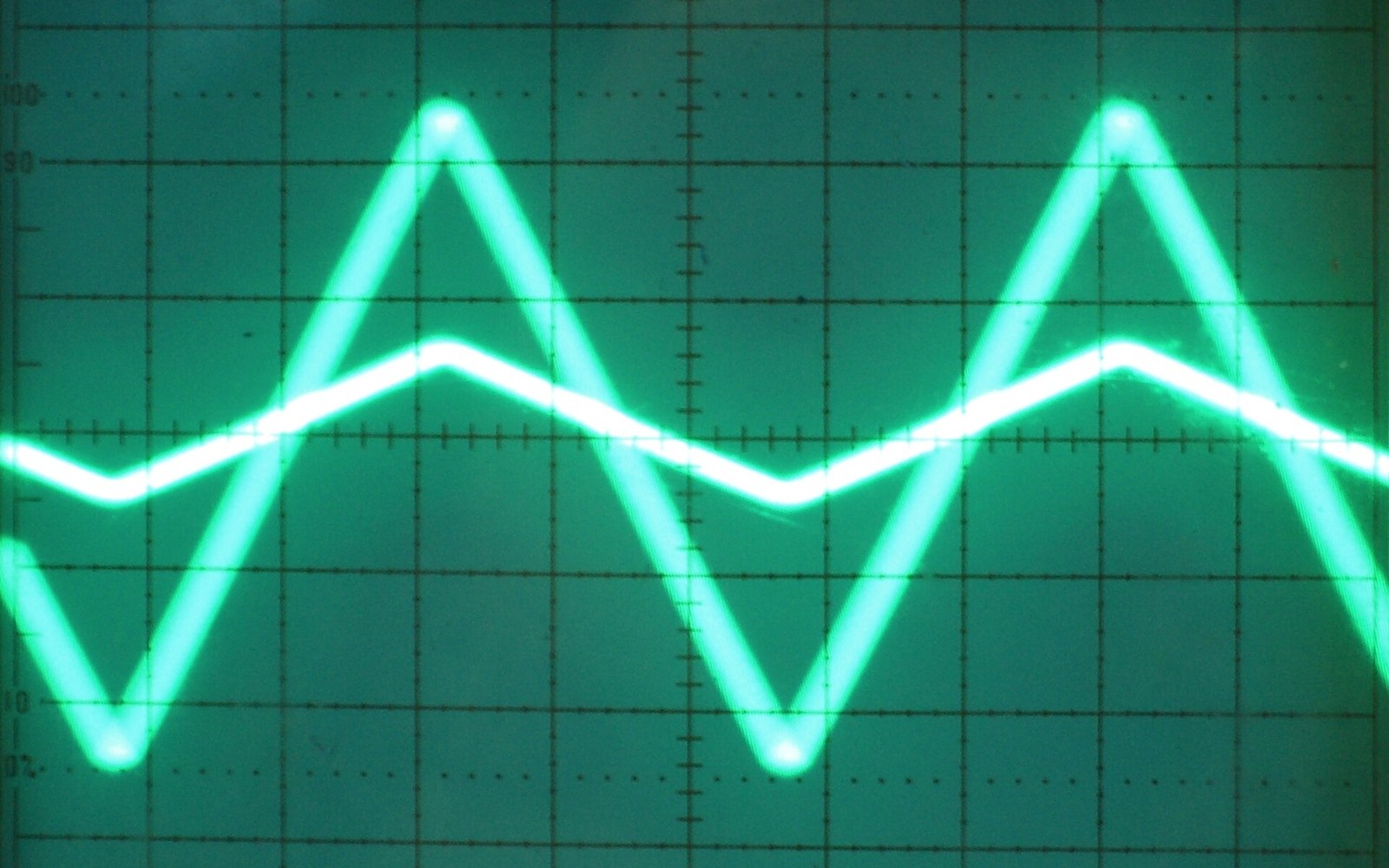
The triangle wave channel occupies a structural role the pulse channels cannot: it handles bass lines and, in many scores, counter-melody at a lower register. Its waveform is the smoothest the 2A03 produces — a staircase approximation of a true triangle with 32 steps per cycle, which strips away the harsh upper harmonics of a pulse and gives a rounder, almost bass-guitar-like tone in the low registers.
The pulse channels also carry the bulk of the arpeggio work on the platform.
The problem is categorical: the triangle channel has no volume envelope. None at all. It is either on, at full amplitude, or it is off. A composer cannot taper a bass note into silence; they can only cut it. At the same time, the channel uses a linear counter to time note length, which means the minimum audible duration is effectively one linear-counter tick — not a continuous fade but a hard stop. Some composers worked around this by using very high-frequency triangle notes whose pitch pushed beyond the audible range when they needed to simulate silence without a hard click; others simply accepted the all-or-nothing character and wrote bass lines that used rests aggressively. The triangle's inability to get quieter is one of the most immediately audible hardware constraints in all of NES music, and it shapes the walking-bass idiom that runs through so much of the catalog.
The noise channel
The noise channel is not a sampler and not a drum machine — it is a linear-feedback shift register running at one of sixteen preset clock rates, producing a pseudo-random bit stream that the DAC turns into a hiss or a tone depending on which rate is selected. At low frequencies the register's period is short enough that a pitch becomes audible: a metallic clang or a buzz that many composers used for percussive punctuation beyond a snare hit. At higher clock rates it thins into white noise, serviceable for hi-hats and cymbals.
The shift register also has a mode flag — sometimes called short mode — that shortens the feedback tap and produces a buzzier, more tonal noise, useful for lower-pitched percussion effects. With only sixteen pitch steps and a binary mode switch, the noise channel is the least flexible of the five, but its role is almost always rhythmic. Tanaka's percussion writing in Metroid stretched it toward atmosphere; most composers used it to mark time and nothing else.
The DPCM channel
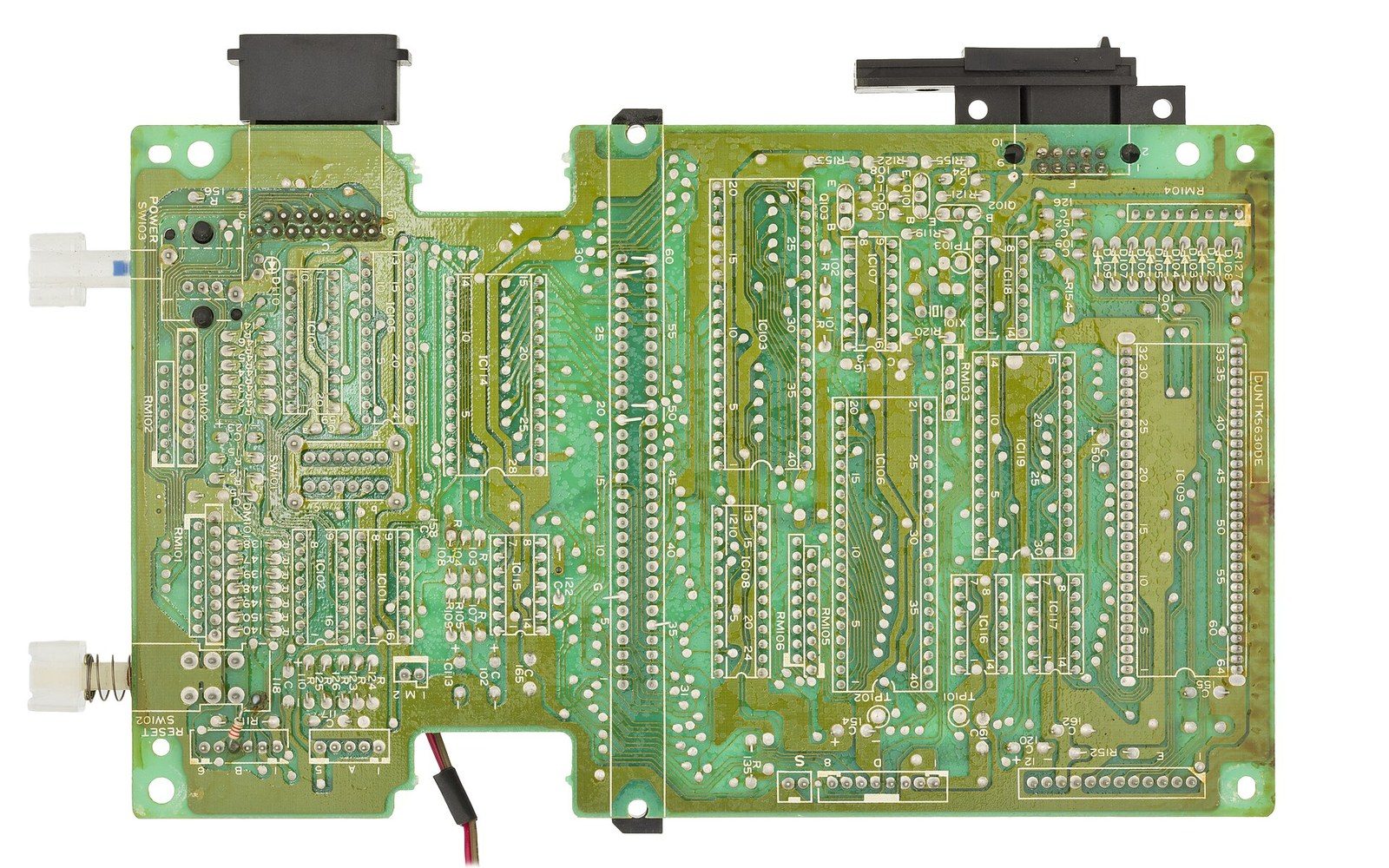
The fifth voice is the most technically complex and, in practice, the least musically exploited. DPCM — delta pulse-code modulation — plays back a 1-bit encoded audio sample at one of sixteen sample rates, reconstructing a rough approximation of a recorded sound from a series of up-or-down amplitude steps. The channel was intended to bring real instrument samples into the mix: a piano attack, a voice, a kick drum with weight and body.
In reality the limitations were severe. DPCM samples consumed cartridge ROM space at a rate that cartridge budgets of the mid-1980s could rarely sustain, and playback stole CPU cycles from the main processor — specifically, the DMC would halt the CPU for a cycle every time it fetched a new sample byte, introducing timing jitter into gameplay code if the sample rate was high. The sound quality was also coarser than composers hoped: the 1-bit encoding and the stepped reconstruction produced audible distortion and a characteristic roughness that made melodic samples sound lo-fi even by the era's standards. The result was that most games used the DPCM channel for a single kick drum hit or, occasionally, a brief speech sample — a musical cameo rather than a sixth instrument. A handful of composers pushed harder, but the CPU-stealing cost meant that heavy DPCM use was a design tradeoff, not just an audio decision.
What the count adds up to
Laid out together, the five channels form a system that is internally quite consistent in its logic: melodic work goes to the pulse channels, bass to the triangle, rhythm to noise, and the DPCM channel sits in reserve for a touch of textural weight when the cartridge budget allows. The limitations are not arbitrary; they reflect the silicon economics that put the audio unit onto the same die as the CPU, keeping the component count and the console's manufacturing cost down. What composers from Kondo to Tanaka to Junko Ozawa discovered was that the constraints were consistent enough to compose against — that a predictable limit is, eventually, a tool. The palette never grew. The music kept finding new things inside it.