The chip that was everywhere else
Three voices, one envelope generator, and a market presence so wide it became invisible
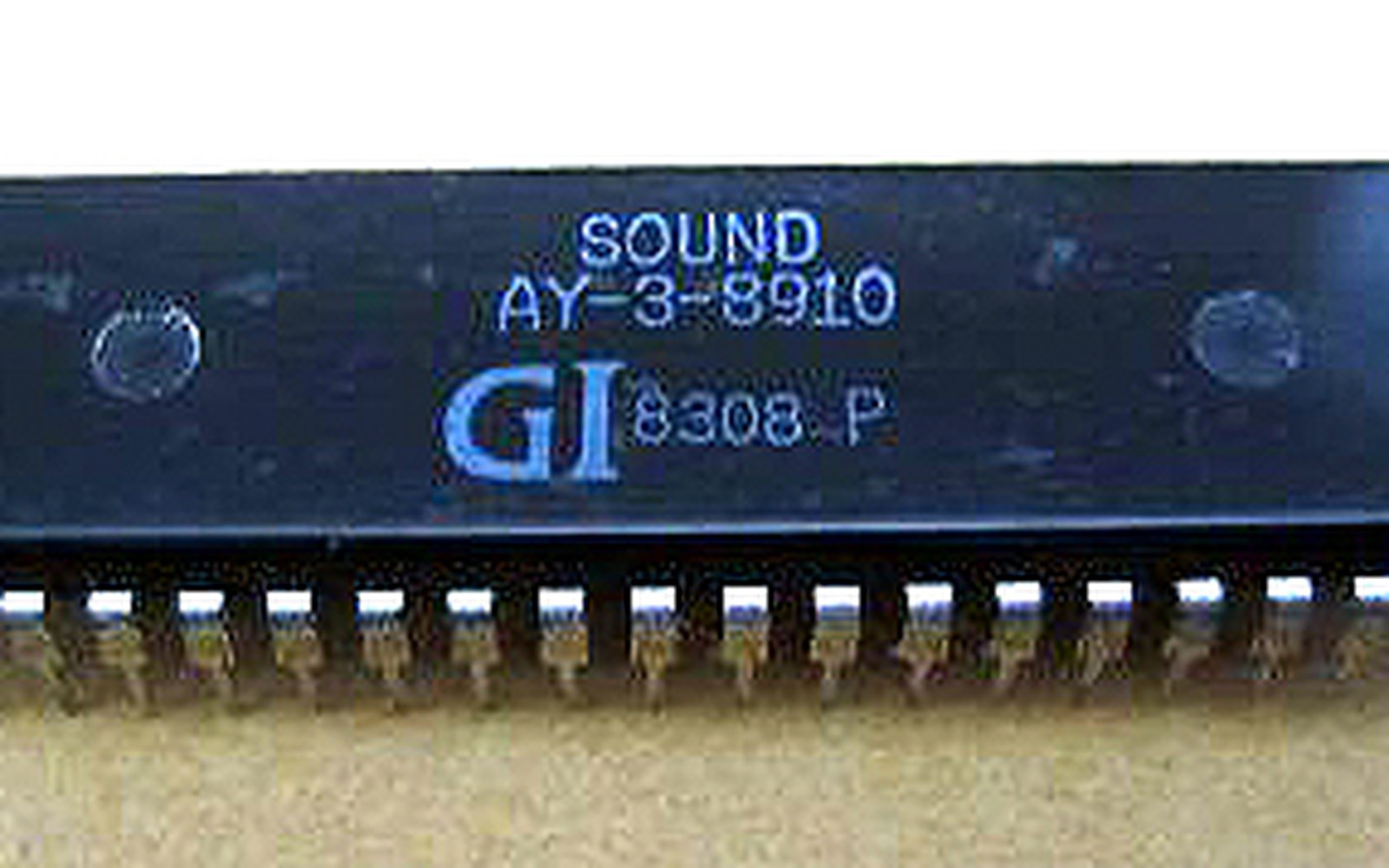
The sound of everything that wasn't Nintendo
General Instrument designed the AY-3-8910 in the late 1970s, and the chip spent the following decade turning up in places that made the Ricoh 2A03 look parochial. Arcade boards, home computers, handheld consoles, synthesizers, personal computers on three continents — the AY-3-8910 and its near-identical clone, the Yamaha YM2149, were so widely licensed and so cheaply sourced that avoiding them was the unusual choice. Almost nobody who heard them knew what they were called.
The architecture is deceptively plain. Three square-wave tone channels, one noise generator, and a single hardware envelope generator shared across all three voices. Each tone channel has an independent amplitude register, so volume can be set per channel, but there is only one envelope shape moving at one rate at any given moment — a meaningful constraint when a composer wants two voices to swell independently. The envelope itself offers eight selectable shapes, from a simple one-shot decay to a sustained sawtooth cycling continuously. Players of early Amstrad CPC or MSX software will recognize the characteristic biting attack and long metallic tail that emerges when composers lean on that shared envelope: it is practically the chip's signature.
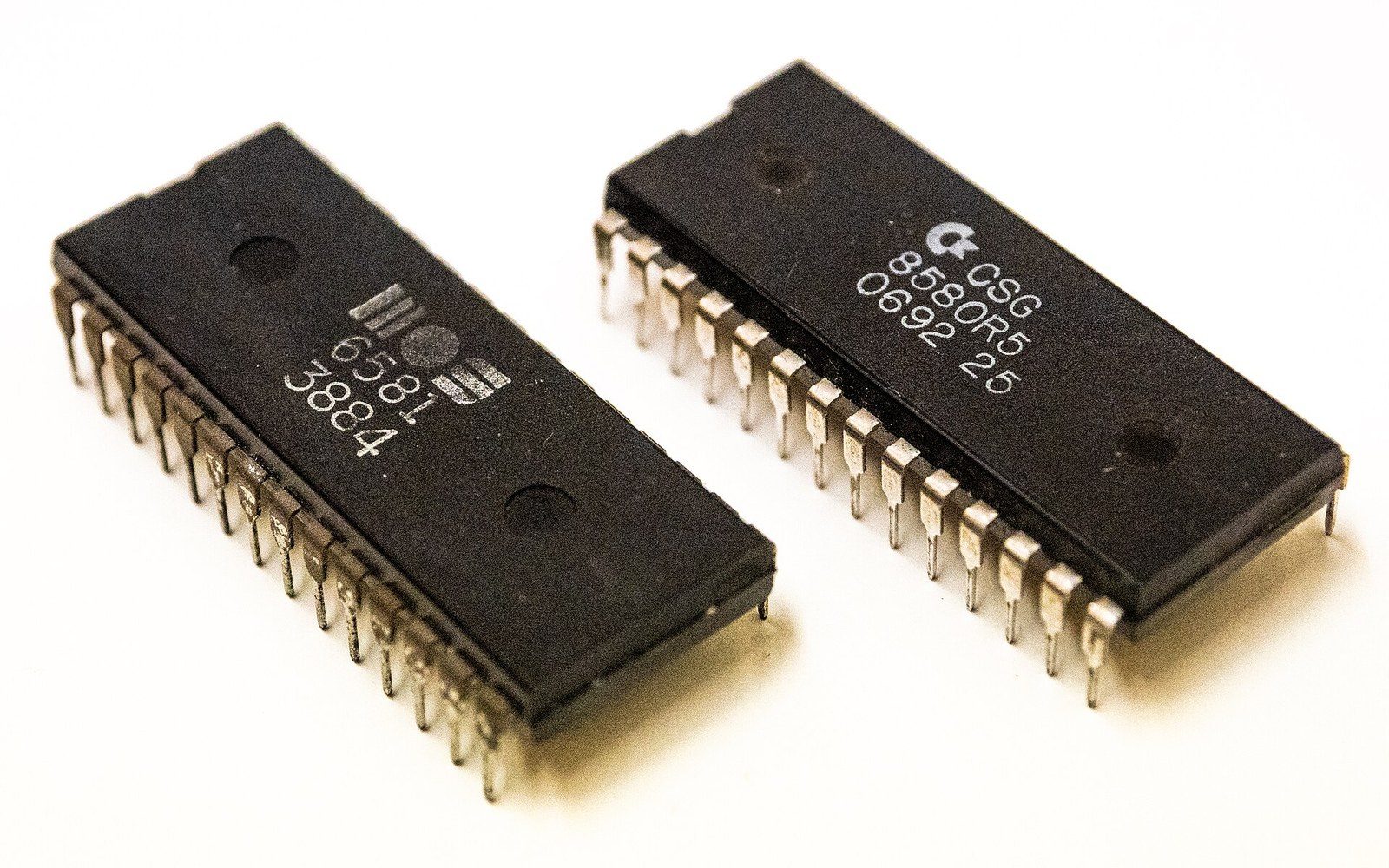
Compared with the 2A03's five channels, the AY-3-8910 looks underpowered. There is no triangle channel, no DPCM sample playback, no duty-cycle variation on the square waves. The noise channel feeds directly into the tone channel mixer rather than occupying its own dedicated voice, which means a channel is either playing a tone or playing noise — not both simultaneously unless you mix them, at the cost of a clean melodic line. On paper, the 2A03 wins. In practice, the AY-3-8910's geographic spread put it into the hands of composers the Nintendo hardware never reached, and those composers wrote music the 2A03 could not have produced anyway.
The composer working on AY-3-8910 hardware faced a different negotiation than a 2A03 composer did.
Familiar platforms, unfamiliar sounds
The chip landed inside the ZX Spectrum 128 when Sinclair added sound hardware to the machine in 1985, after the original 48K model had shipped with nothing but a single buzzer. It was the default sound hardware on the Amstrad CPC range from launch in 1984, and it was specified in the MSX standard adopted across Japanese, European and South American manufacturers simultaneously — meaning a single piece of MSX software drove the same AY-3-8910 in a Philips, a Sony, a Yamaha and a Toshiba machine. Atari chose a different path with the POKEY in its 8-bit computers, and Commodore's SID was an entirely different class of hardware, but below those two the AY-3-8910 was the default assumption across much of the non-Nintendo world.
In arcades the situation was similar. Konami used it extensively in early boards before moving to Yamaha FM chips; Capcom, Irem and others cycled through it as a secondary or primary sound source in hardware that might also carry a dedicated speech chip or a discrete percussion circuit on top. This layering, rather than any single piece of software, is why the chip's footprint is so hard to quantify: it rarely appeared alone in arcade contexts, and its contribution dissolves into the larger mix.
The composer working on AY-3-8910 hardware faced a different negotiation than a 2A03 composer did. The envelope generator could be weaponized for rich, physically-plausible attacks on bell or marimba sounds that the NES hardware could only approximate through software volume stepping. But building a convincing bass line without a dedicated low-frequency voice demanded tricks with tone registers and careful envelope timing. The workarounds are different from those NES composers invented, and the idiomatic AY-3-8910 score — punchy, harmonically active, slightly glassy — is recognizably its own thing even when you cannot name the chip producing it.
That invisibility is part of the story. The 2A03 is inseparable from a single platform and its canon of named composers: Koji Kondo, Hirokazu Tanaka, the Konami and Sunsoft arrangers. The AY-3-8910 dissolved into dozens of platforms, dozens of national software industries, thousands of anonymous titles. It was the infrastructure of a whole era of electronic sound — heard by more people than almost any rival chip, named by almost none of them.