The console shipped in 1983 and the audio was already fixed
Once Ricoh pressed the 2A03 into silicon, Nintendo's sound palette was set — every musical advance over the following decade had to come from outside the chip.
A die-cast ceiling
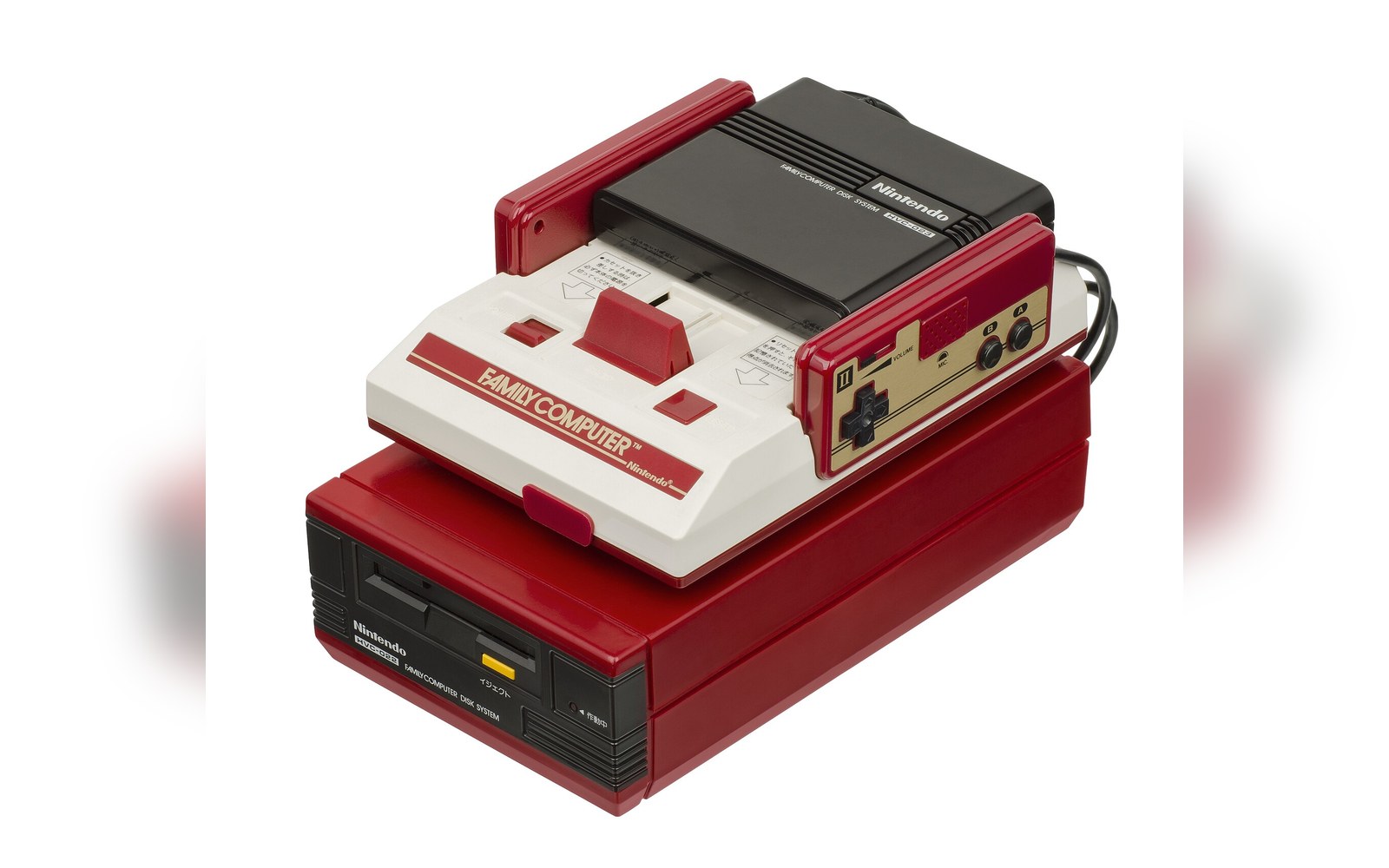
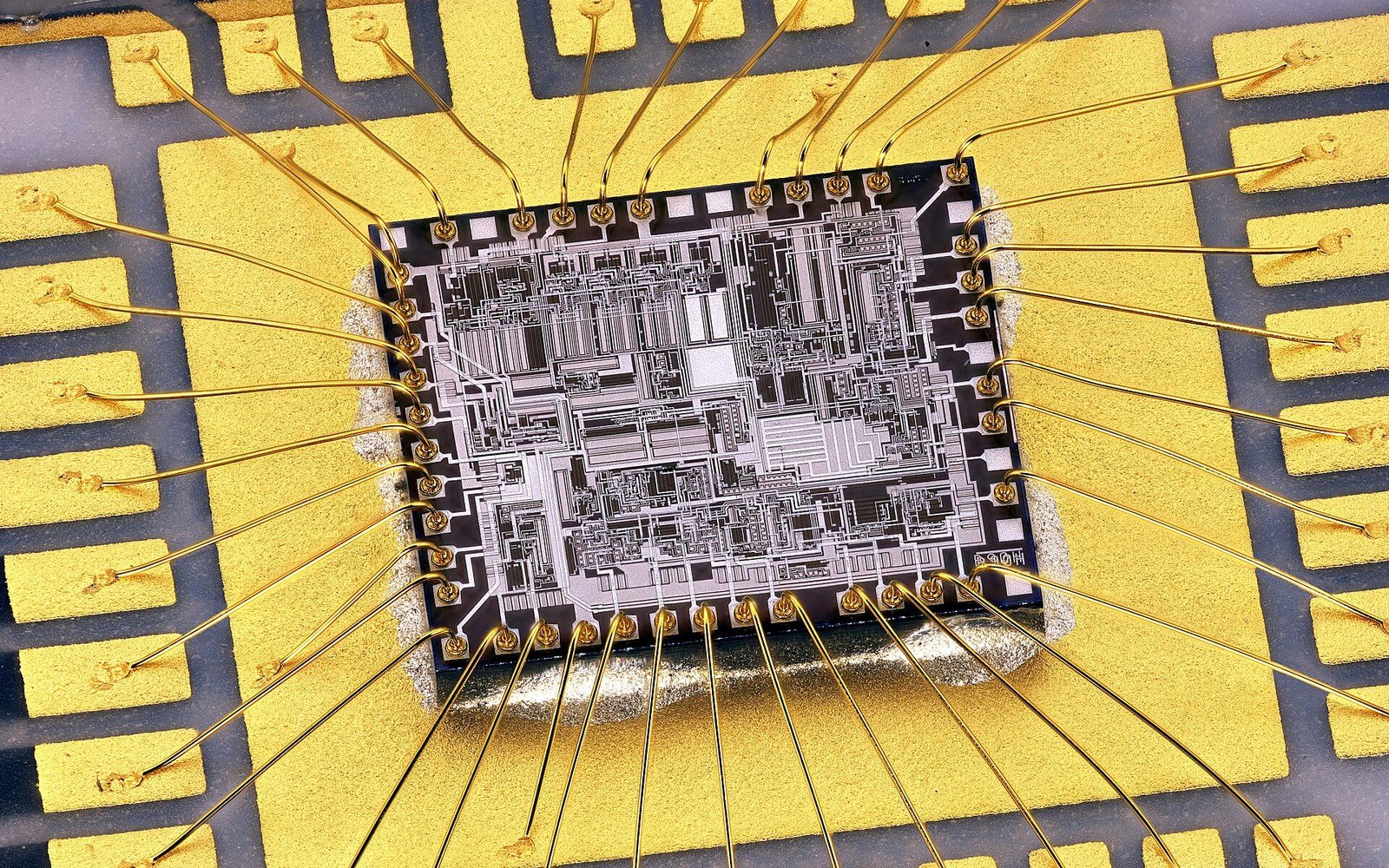
The Famicom launched in Japan on 15 July 1983, and in the box was a piece of hardware that would define the sound of an entire era. The Ricoh 2A03 — a modified MOS 6502 CPU with an audio processing unit built directly onto the same die — gave composers two pulse channels, one triangle channel, one noise channel, and a delta-pulse-code-modulation sample channel. Five voices. No filters. No ring modulation. Fixed waveforms, fixed mixer topology, fixed everything. The decision to put the audio unit on the CPU die to save parts meant that updating the sound hardware would require a wholly new chip, which would require a new console. Nintendo had neither the reason nor the appetite for that.
What this meant in practice was that the hardware constraints of 1983 stayed on the shelf for the entire commercial life of the console. Twelve years of commercial releases — from Donkey Kong on the launch lineup to Kirby's Adventure in 1993 — had to make music inside boundaries drawn at the start of the decade. The pulse channels could produce four duty cycles: 12.5%, 25%, 50%, and 75% (the 25% and 75% settings are phase-inverted mirrors of each other and sound identical). The triangle channel had no volume register at all, meaning the programmer could not fade it — it was either on or off. The noise channel drew its randomness from a linear-feedback shift register with sixteen available period settings and a short mode that produced a clipped, metallic timbre useful for hi-hats and rimshots. The DPCM channel could replay one-bit delta-encoded samples at several fixed rates, enough for a thump of a kick drum or a rough voice clip, but at a real cost: every sample fetch stole CPU cycles from the game running underneath.
These were not oversights. They were the engineering arithmetic of a consumer device priced to move in 1983, which is also to say: they were permanent.
What the cartridge could and could not fix
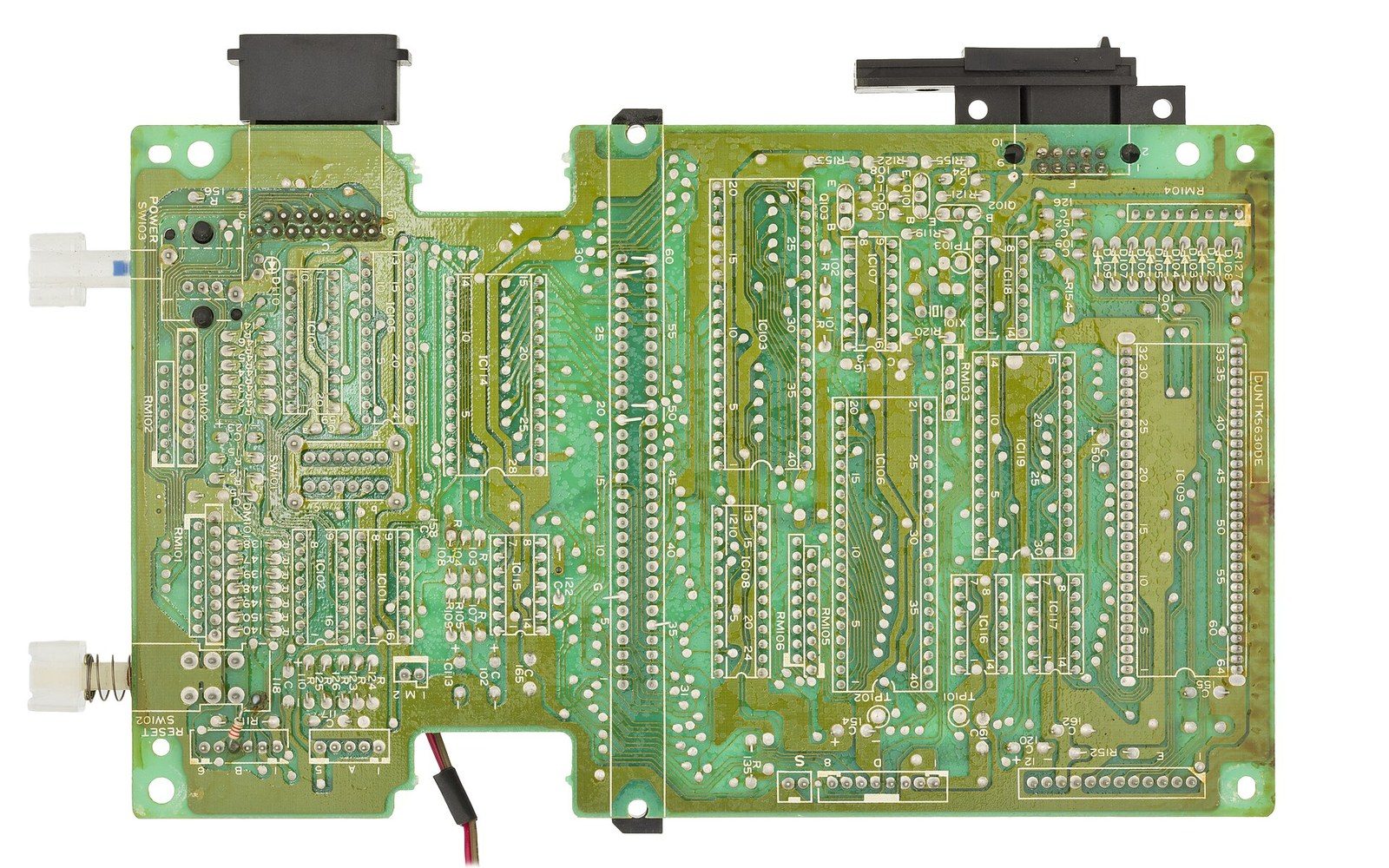
The genius of the Famicom's cartridge bus — specifically the way it routed audio — is that it allowed the PCB inside each cartridge to contribute additional sound before the signal reached the Famicom's output. Nintendo had reserved pins on the expansion connector for exactly this purpose. Once third-party developers understood those pins, the race to escape 1983's ceiling began in earnest.
Konami led with its VRC6, first used in Akumajō Densetsu in 1989, adding two extra pulse channels and a sawtooth oscillator. Sunsoft's 5B, used in Gimmick! (1992), incorporated a Yamaha YM2149 — a clone of the General Instrument AY-3-8910 — bringing three additional tone channels with a noise bus. Namco's 163 added up to eight software-defined wavetable channels, although the more channels programmed, the more CPU overhead. Each of these expansion chips brought their own voices from inside the cartridge, bending the fixed hardware ceiling without touching the 2A03 itself.
Konami led with its VRC6, first used in Akumajō Densetsu in 1989, adding two extra pulse channels and a sawtooth oscillator.
The compromise was obvious: each chip was a licensed territory. A game using VRC6 hardware sounded richer only on a cartridge containing a VRC6. The base 2A03 underneath never changed. A player with a standard cartridge and a standard Famicom in 1989 was still hearing 1983 hardware. The expansion route solved the problem for specific titles and specific hardware configurations, and the North American NES cartridge format — with its different pin layout and lockout chip — made most of that expansion audio unavailable to players in the West altogether. Koichi Sugiyama, Nobuo Uematsu, and the rest of the era's console composers working outside those expansion carts had to find their advances elsewhere: in technique, not in silicon.
What the composer could and could not fix
This is where the history becomes genuinely interesting, because the response to fixed hardware was, ultimately, compositional ingenuity at a scale the medium had not yet seen. Koji Kondo's work on Super Mario Bros. (1985) demonstrated what lucid arrangement could do: a melody shaped to be memorable at the pulse channel's brightness, bass lines voiced for the triangle's constrained register, percussion mapped to the noise channel's available timbres with an economy that never felt like poverty. Hirokazu Tanaka took the same five channels in Metroid (1986) and produced something almost unrecognisable — noise channel drones, detuned pulses, silences used as instruments. Same chip. Entirely different palette, because the palette was imagined differently.
The arpeggio — playing the notes of a chord in rapid sequence across a single channel — became the 2A03's signature trick precisely because chords were architecturally unavailable. One channel, one pitch at a time: if you wanted harmony, you had to fake it at speed. Composers learned to exploit the rapid cycling of notes across channels to imply counterpoint and chord clusters the hardware could not actually produce simultaneously. The effect became so idiomatic that it stopped reading as a workaround and started reading as style.
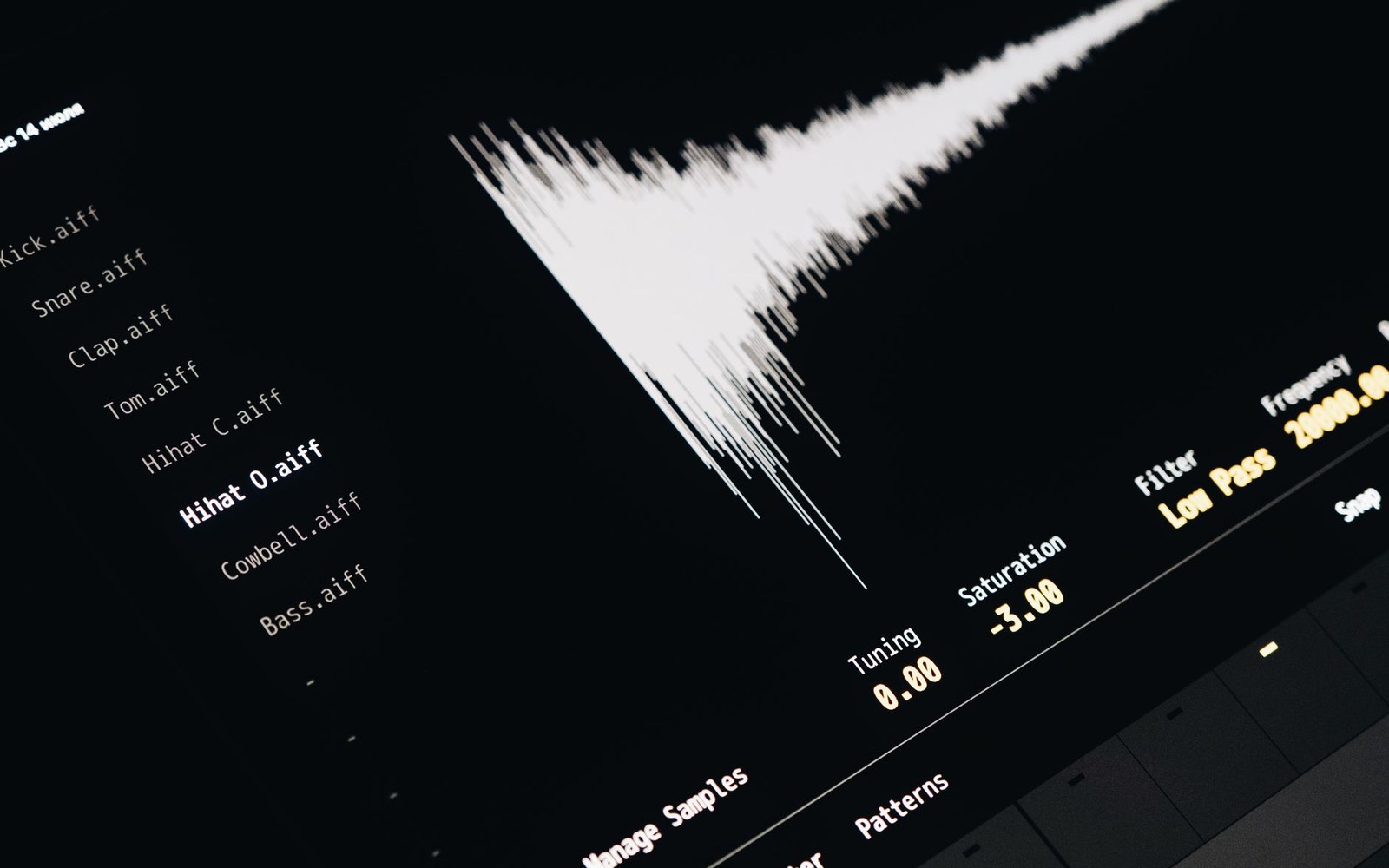
The DPCM channel's expense — its cycle-stealing, its storage cost, its limited fidelity — pushed composers toward restraint. Sunsoft's sound designers were particularly resourceful: their bass lines on games like Batman (1989) used the triangle channel pushed into a very low register together with carefully timed DPCM drum samples to create a low-end presence that felt physically grounded for 1989 NES audio. The FamiTracker project, which the modern tracker scene uses to write for real 2A03 hardware, preserves and extends these techniques; its detailed documentation of the chip's registers is among the clearest windows into what the chip would and would not permit.
The limit nobody could reason around was the mixer. The 2A03's five channels fed a non-linear analog summing circuit before they left the chip — pulse channels on one bus, the remaining three on another — and the mixing curves were baked into the die. A loud DPCM sample audibly pushed the other channels around. A very low triangle note would sometimes create a beating interaction with a pulse channel at a nearby frequency. Composers learned these interactions, catalogued them, and either avoided them or used them. Some of the warmth characteristic of Famicom music is a consequence of that non-linear sum behaving in ways a clean digital mix would not. It was getting it wrong in audible ways that defined the sound, and early emulators that modeled the mixer as linear got the character of the chip wrong even when they got the notes right.
By the time Nintendo of Japan formally ended Famicom production in 2003 — twenty years after launch — composers, programmers, and tracker artists had found approaches to the 2A03 that its 1983 designers demonstrably did not anticipate. The ceiling had not moved. The music found the ceiling and kept finding ways to play against it, which is a different thing entirely. The hardware froze in 1983. The art built on top of it did not.