The audio was cheap because it had to be
A bill-of-materials decision first, a musical constraint second: the 2A03's sound unit is on the CPU die because adding a separate chip costs money.
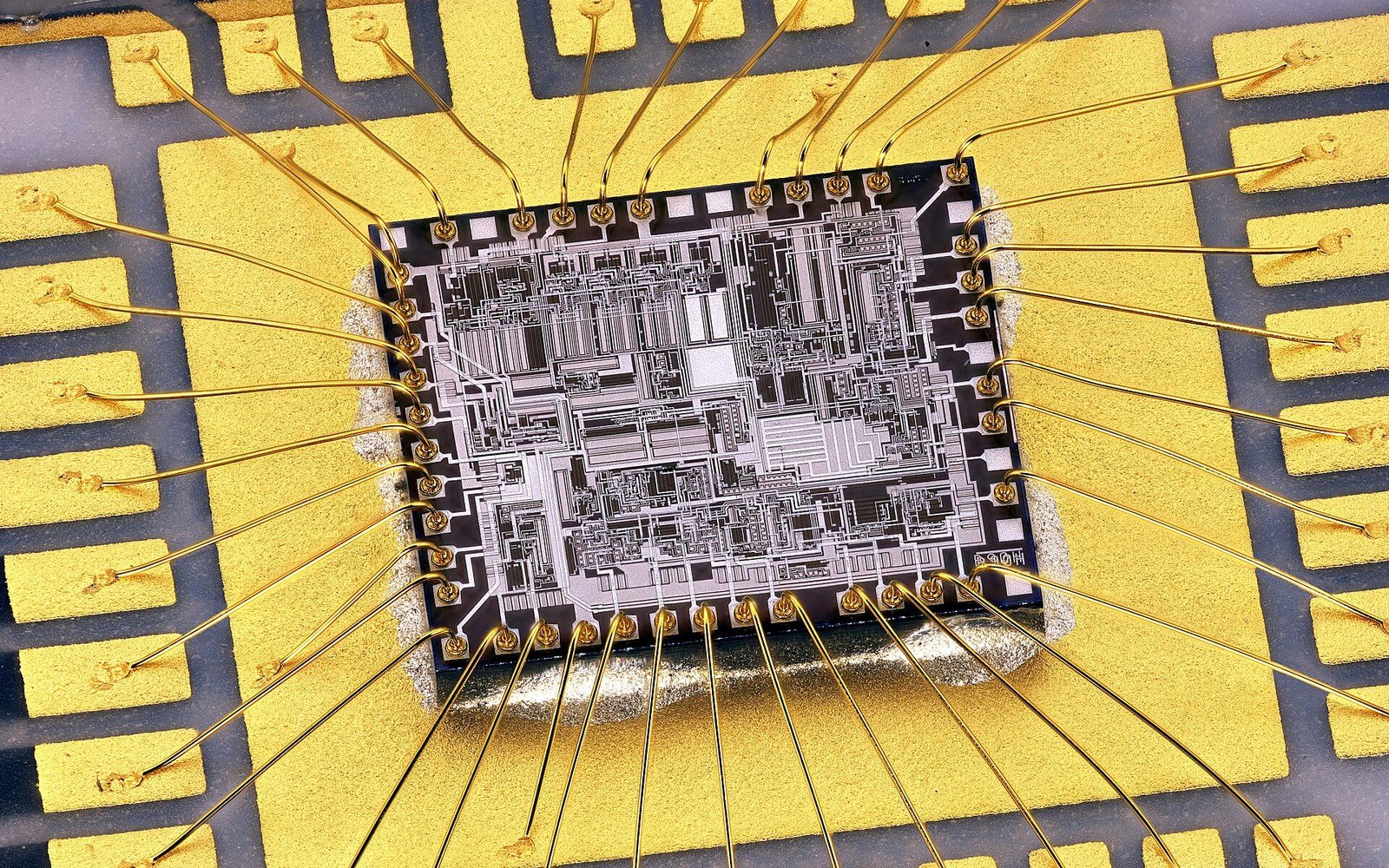
One die, two jobs
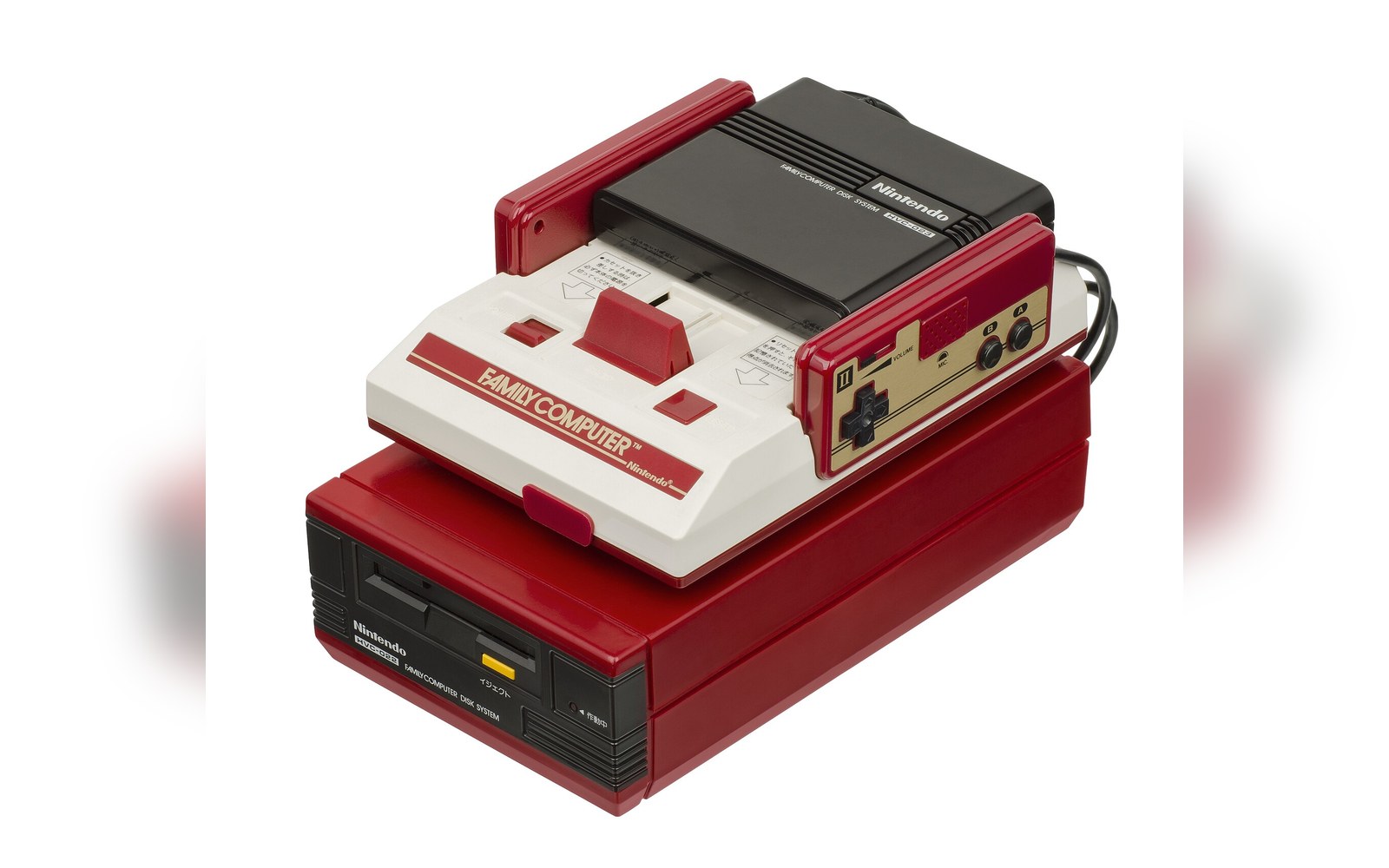
The Ricoh 2A03 is, at its core, a licensed MOS 6502 core with the decimal mode disabled — and bolted onto the same piece of silicon, the entire sound unit. That integration was not an aesthetic choice. Nintendo needed the Famicom to hit a retail price point in 1983 that would survive a market still bruised by the North American video-game crash. Putting audio generation on the CPU die eliminated one component, one socket, one PCB trace run, and a fraction of a cent multiplied across every unit manufactured. At mass-production volumes, fractions of a cent are the argument.
The consequence for composers is the machine those decisions produced: two pulse channels, one triangle, one noise channel, and one DPCM sampler — no filter, no dedicated envelope hardware beyond the pulse and noise channels' simple volume envelope, and a mixing stage that is non-linear in ways most documentation does not mention. Every musical limitation traces back to that bill-of-materials calculation.
What the cost ceiling removed
A separate sound chip in 1983 could do meaningfully more. General Instrument's AY-3-8910, already shipping in arcade hardware and home computers by that point, offered three tone channels plus a noise channel and a rudimentary envelope generator — all on dedicated silicon with its own clock domain. The Commodore 64's SID, designed by Bob Yannes and released in 1982, went further still: three voices, a resonant filter, and genuine ADSR envelopes. These were real components with real part costs.
The 2A03's sound unit had no filter at all. The triangle channel carries no volume register — it plays at full amplitude or not at all, because a proper volume control would have required additional circuitry that the die budget did not accommodate. The noise channel is a linear-feedback shift register clocked at one of sixteen fixed rates, with a short-mode flag that produces a metallic timbre: functional, but simple enough to implement in very little silicon area. The DPCM channel — nominally a sampler — is a 1-bit delta encoder running at fixed sample rates, which is why it costs CPU cycles every time it fetches a byte and why most composers treated it as a kick-drum slot rather than an instrument.
None of this is an accident or an oversight. It is what you get when the constraint is area on a die that already contains a CPU.
The constraint becomes the sound
What is remarkable is how completely that identity of limitation became an identity of sound. Koji Kondo's scores for Super Mario Bros. and The Legend of Zelda — written inside these same walls — used the pulse channels' four duty cycles as timbral variation, not as a workaround. Hirokazu Tanaka built the atmosphere of Metroid out of the noise channel and detuned pulses: not despite the hardware's poverty but through close attention to exactly what it would and would not do.
Later composers, particularly those working on expansion audio cartridges from Konami, Sunsoft, and Namco, showed what happened when the part count rose even slightly. The VRC6 added two more pulse channels and a sawtooth; the results are audibly richer. The baseline chip, by contrast, produced its character precisely because the design document was a cost sheet.
The 2A03 was manufactured by Ricoh under agreement with Nintendo, and the specific decisions baked into it — die integration, no decimal mode, the particular channel set — were fixed before the first Famicom shipped. Composers inherited those decisions without negotiation. What the tracker scene and the concert stage have found, decades later, is that constraints imposed by an accountant in 1982 can sound, from the right distance, like the voice of an era.